
How to Build a Training Plan Your Child’s Coach Will Actually Love
Whether you’re a parent trying to support your young athlete at home, or a coach looking to give families…
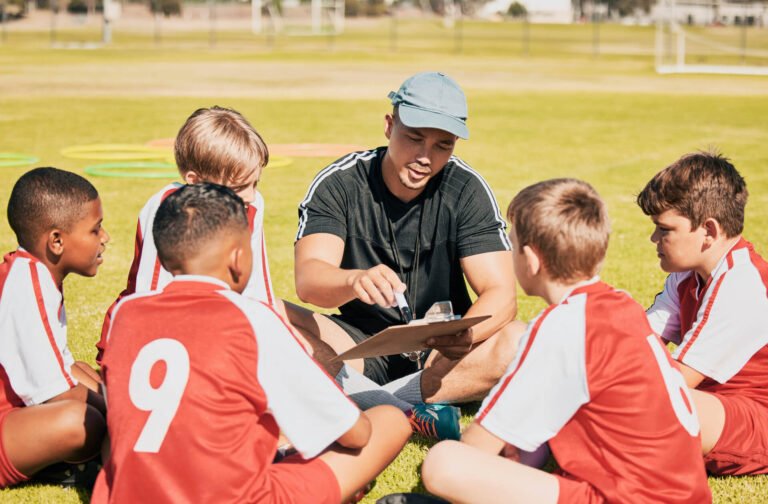
Whether you’re a parent trying to support your young athlete at home, or a coach looking to give families practical guidance, one thing is certain: the kids who improve the fastest are the ones whose parents and coaches are working from the same playbook.
The problem? Most families and coaches never talk about what happens outside of practice. Parents want to help, but they don’t know what to focus on. Coaches want consistent athletes, but they rarely have time to hand out individual homework.
This post bridges that gap. Here’s how to build a simple weekly training plan that keeps both parents and coaches on the same page — and keeps your athlete developing year-round.
Why a Shared Plan Matters
Research in youth sports development consistently shows that deliberate practice outside of team sessions is one of the biggest predictors of long-term improvement. But “practice at home” without direction often means kicking a ball around the garden aimlessly, or worse, overtraining the wrong things.
A structured plan gives:
- Parents clear, simple tasks they can supervise without needing to be sports experts.
- Coaches confidence that home reps are reinforcing — not undermining — what’s being taught in training.
- Athletes a sense of ownership over their own development.
Step 1: Start With What the Coach Is Already Working On
Before building any home plan, parents should have a quick conversation with the coach. Ask one simple question:
“What’s the one technical skill you’d like [child’s name] to focus on this month?”
Most coaches will love being asked. This single question aligns home practice with team goals, and it shows the coach you’re engaged and supportive rather than working against their system.
Common answers might be:
- First touch / ball control
- Weak foot development
- Shooting technique
- Defensive positioning
Write it down. That’s your plan’s focus for the next 2–4 weeks.
Step 2: Build a Simple Weekly Schedule
Youth athletes don’t need hours of extra work. In fact, overloading young players leads to burnout and injury. A realistic home schedule looks like this:
2–3 sessions per week, 20–30 minutes each.
Here’s a sample week for a player working on ball control:
Monday: Juggling — 10 minutes. Start with two feet, then challenge one foot. Count personal bests.
Wednesday: Wall passes — 15 minutes. Both feet. Add variation: receive with inside, outside, sole.
Friday: Dribbling course — 20 minutes. Set up cones or water bottles. Add speed gradually.
Rest on the other days, or do light physical activity like swimming or a family walk. Recovery is part of the plan.
Step 3: Track It — Even Simply
Tracking progress does two things: it motivates the athlete, and it gives the coach something to work with at the next session.
It doesn’t have to be complicated. A basic approach:
- Note what was done each session (5 minutes, not a full report).
- Track one measurable thing — juggle count, cone time, number of clean passes.
- Share a quick update with the coach monthly.
If you want something more structured, tools like Sportyzed let you log sessions, track progress over time, and share plans across a team — so coaches can see what their athletes are working on at home, and parents can follow a structured week-by-week program.
Step 4: Keep It Fun
This is the most important step — and the one most adults forget.
Young athletes disengage the moment home practice feels like a chore. A few ways to keep it enjoyable:
- Let the child set their own challenge for each session (“Today I want to beat my juggling record”).
- Invite a sibling or friend to join occasionally.
- Celebrate small wins out loud. Progress, not perfection.
- Never turn a session into a lecture. If it’s not going well, stop early and come back tomorrow.
The goal isn’t to create a miniature professional. It’s to build a love of improvement — a habit of showing up, trying, and getting a little bit better every week.
For Coaches: How to Use This With Your Team
If you’re a coach reading this, consider sharing a simplified version with your parents at the start of each month. A one-page “Home Homework” sheet with:
- One technical focus for the month
- Two or three specific drills with clear instructions
- A suggested weekly schedule
Parents want to help. They just need direction. When you give them a simple, concrete plan, you’ll be amazed how much more prepared your players arrive at the next session.
Platforms like Sportyzed are built for exactly this: coaches can create training plans, assign them to individual players, and parents can track sessions at home without needing to understand the game deeply.
Putting It All Together
Building a great training plan doesn’t require a sports science degree. It requires three things: a clear focus, a realistic schedule, and a little bit of consistency.
Start small. Pick one skill. Practice it three times a week for a month. Measure something. Adjust. Repeat.
The athletes who get better aren’t necessarily the most talented. They’re the ones who put in small, deliberate reps over a long period of time — with a coach who gives them direction, and parents who make space for it.
—
Want a head start? Sportyzed includes ready-made training plan templates for coaches and parents. Try the planner free →